Everything we sell starts as continuous glass fibre in a thermoplastic matrix. Stacked over a core it becomes the Li:ma Sandwich Panel; consolidated ply on ply it becomes the Li:ma Laminate; co-extruded under a formable hard coat it becomes Li:ma NEXKIN. Each is specified per programme and produced on our own lines.
- One panel, consolidated under heat
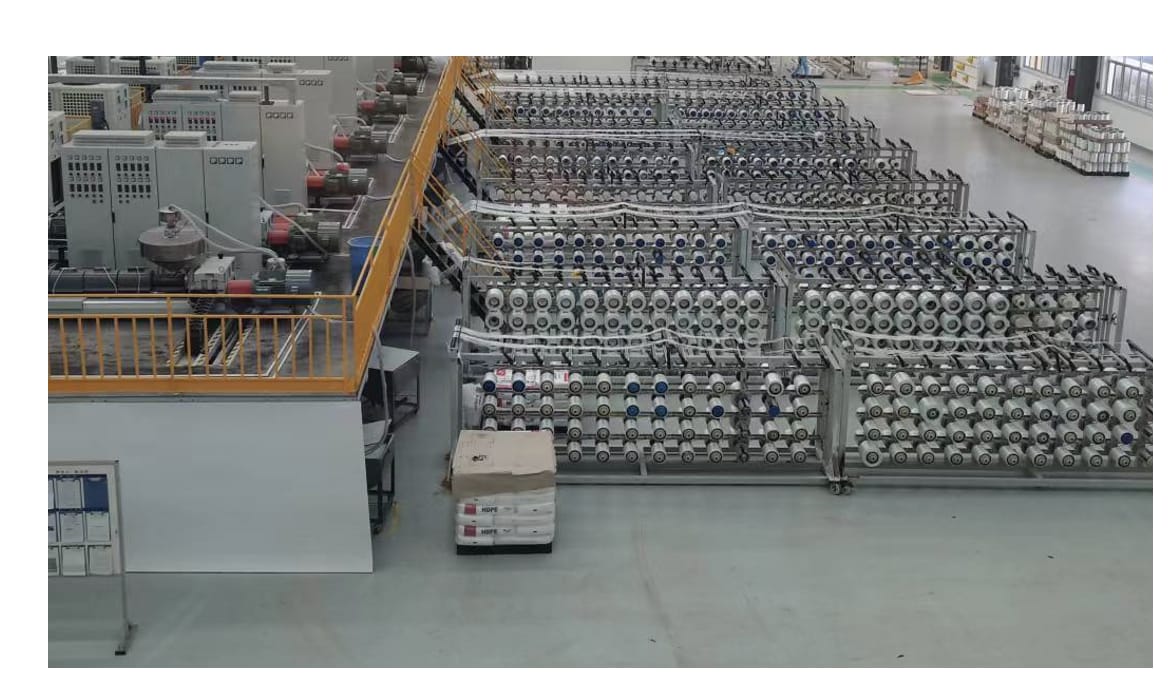
What CFRT is.
CFRT — continuous fibre reinforced composite — is the backbone of every product in this catalog, supplied as UD tape and organo sheet.
A CFRT is a lightweight, high-strength thermoplastic reinforced with continuous fibres — not chopped strands. Because the fibre never breaks, the tape carries load the way steel does, at a fraction of the weight.
It is customised at two levels: the raw-material formulation, and the laminate structure it is stacked into. Against metal and conventional plastics that buys an uncommon combination — low weight, high strength, thin walls and free-form geometry — for automotive, mobility, transportation, industrial and structural parts where weight and stiffness both matter.
And because the matrix is thermoplastic rather than thermoset, the material can be remelted, reprocessed and recycled at end of life.
- Lightweight
- High strength
- Design flexibility
- Thin-wall structure
- Recyclability
The panel that replaces plywood, steel and foam kits.
CFRT skins consolidated over a selectable core. The skins carry the load; the core carries the thickness; the whole panel weighs a fraction of what it replaces.
The core is a menu, not a given. PP honeycomb sets the balance of weight, strength and cost; XPS, PET, PU and PVC foams trade those against thermal insulation, stiffness and impact resistance. Matched to customised CFRT skins, the panel is designed to the duty — not adapted to it afterwards.
- Insulation and structure, consolidated as one panel
| Category | Capability |
|---|---|
| Panel size | Up to 3.2 m wide × 12 m long |
| Panel thickness | 5–120 mm |
| CFRT skin | 0.4–2.0 mm |
| Core options | PP honeycomb · PET · PVC · XPS foam |
| Customisation | Skin and core structure optimised to customer-specific performance requirements |
Panels are produced to order; certified values per grade travel with the TDS.


Stiffness is a stacking decision.
CFRT plies stacked in engineered orientations and consolidated on a double-belt line into one uniform sheet. The layup is the specification.
- Consolidated into one sheet on a double-belt line
Strength, stiffness and toughness are tuned by where the fibre points: 0° plies carry bending, 90° plies carry transverse load, ±45° plies carry shear. The resin is chosen the same way — PP, PE or PA against the performance, application and operating environment — and thickness and width follow the part, not a standard sheet size.
- Drapes into deeper geometry than cross-ply
| Category | Capability |
|---|---|
| Sheet size | Up to 3 mm thick × 2,700 mm wide |
| CFRT skin (single ply) | 0.25 mm |
| Resin options | PP · PE · PA |
| Layup | 0°/90° cross-ply or woven |
| Customisation | Resin and layers optimised to customer-specific performance requirements |
Per-grade tape data (tensile, modulus, fibre content) lives on the technology page; certified values via the RFQ desk.
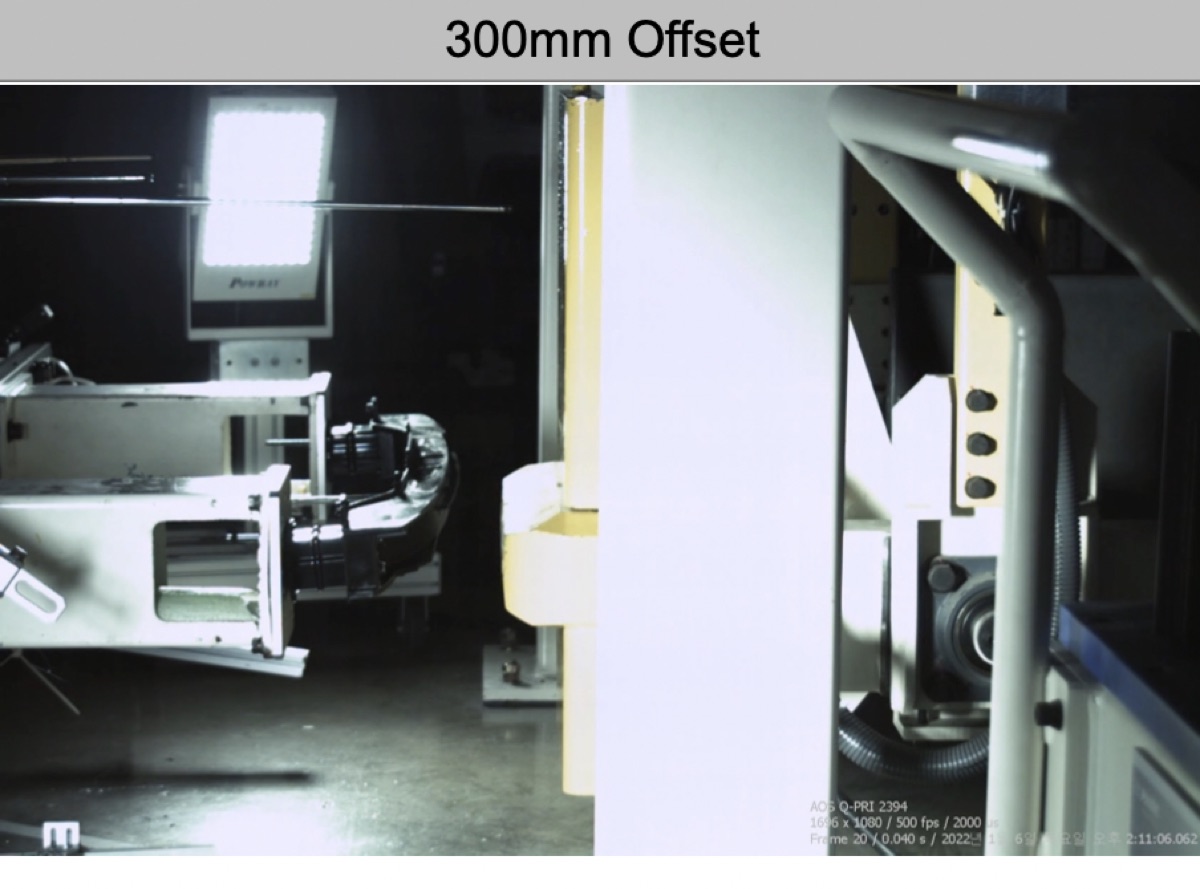
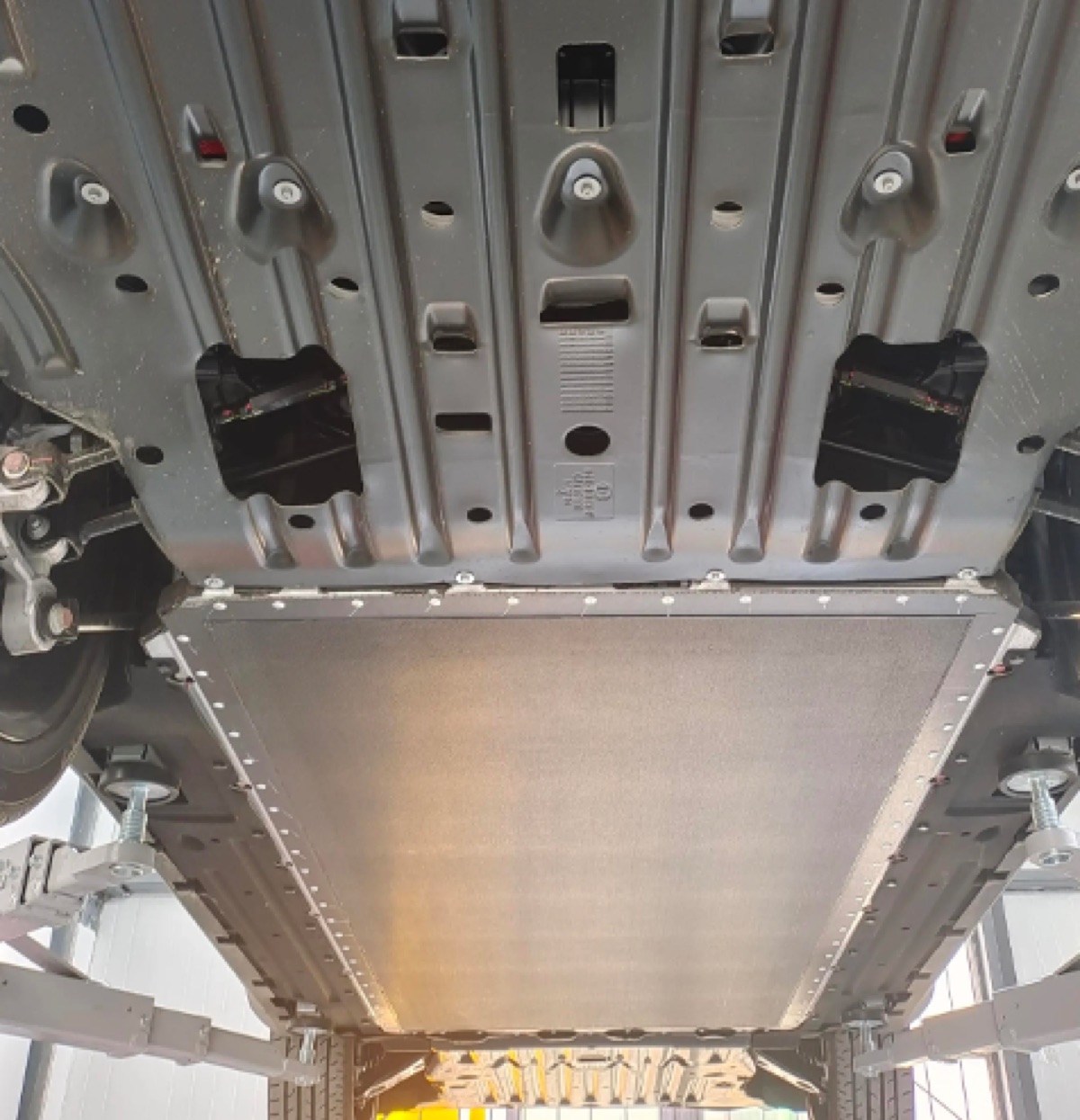
Colour that ships inside the sheet.
A pre-hard-coated colour sheet: colour, surface and protective hard coat integrated into one formable material, thermoformed directly into complex exterior parts.
Conventional exteriors are formed first, then painted or hard-coated — a second plant's worth of process. NEXKIN ships with both already inside: the sheet arrives coloured and coated, and forms into three-dimensional geometry without giving either up.
The key technology is the hard coat itself, formulated to survive 3D forming without cracking. What comes out of the tool has a high-gloss, premium surface with real scratch resistance — and the painting and post-coating steps are simply gone.
In the formed part, the sheet gains a long-fibre structural backing. How the one-shot forming works
- Colour, gloss and protection in one formable sheet



Specify it, then order it.
Send a part, a duty cycle or just a target weight. The RFQ desk returns a TDS, a layup proposal and a quote from the engineering team.